
Dental implants and natural teeth work together to create a strong, functional smile, but they are not identical. Understanding how implants compare to natural teeth helps you choose the right tooth replacement options, especially if you are weighing up dental implants Hamilton for yourself or a family member.
Implants vs natural teeth
- Natural teeth have a living root with nerves and ligaments, while dental implants are titanium posts that integrate with the jawbone and act as artificial roots; both can provide excellent chewing function when healthy.
- Modern implants have long-term survival rates of around 95 to 97 per cent at 10 years, making them one of the most reliable tooth replacement options when planned and maintained correctly.
- Implants usually cost more upfront than bridges or dentures, but often last longer and do not require drilling healthy neighbouring teeth, which can make them a cost-effective solution over time.
- At Hamilton Dental Centre, our experienced team offers full implant planning, placement and restoration, including management of bone, gums and long-term maintenance, so you understand exactly how implants compare with keeping or restoring natural teeth in your specific situation.
1. Differences between implants and natural teeth
Natural teeth are living structures made up of enamel, dentine, pulp and a root surrounded by the periodontal ligament. This ligament contains nerves and tiny fibres that connect the tooth to the surrounding bone, giving natural teeth a slight springiness and a sense of pressure and position.
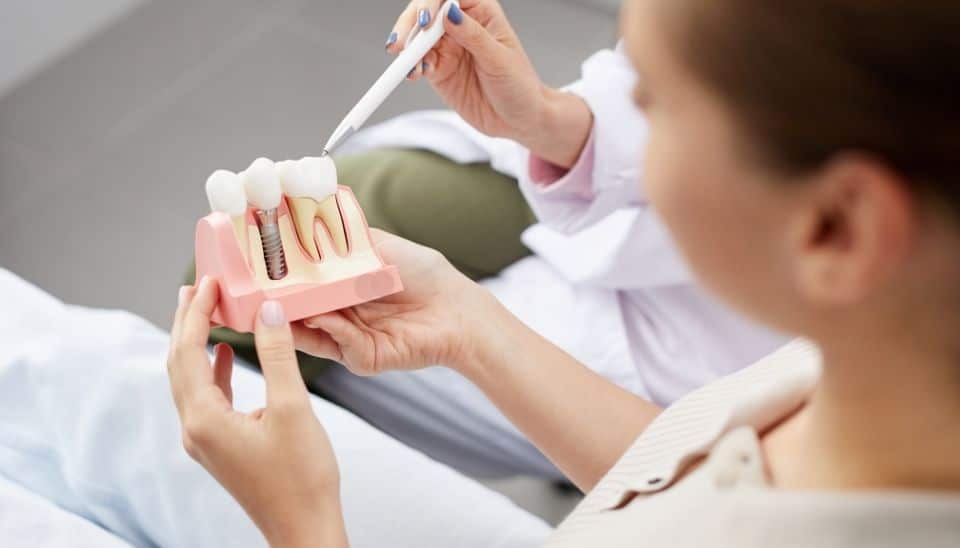
Dental implants are different. An implant is a small titanium or titanium alloy post placed in the jawbone to replace a missing root, with a connector (abutment) and a crown or bridge attached on top. Once healed, the implant becomes directly fused to the bone without a ligament, which makes it very stable but less flexible than natural teeth.
In terms of daily life, both implants and healthy natural teeth allow you to chew, smile and speak normally, but they respond differently to disease. Natural teeth are prone to decay because they contain enamel and dentine, whereas titanium implants do not decay, although the surrounding gums and bone can still become inflamed or infected, a condition known as peri-implantitis.
For many patients in Hamilton, the key comparison is that implants can preserve jawbone volume in the area of a missing tooth better than a removable denture, by transmitting chewing forces into the bone in a similar way to a natural tooth root.
2. How dental implants work (osseointegration explained)
The success of dental implants relies on a biological process called osseointegration. This term was first described by Professor Per Ingvar Brånemark and refers to a direct structural and functional connection between living bone and the surface of a load-carrying implant.
In simple terms, after the implant is placed in the jaw, your bone cells grow and remodel tightly around the titanium surface, locking it into place at the microscopic level. Studies describe osseointegration as bone forming directly on the implant surface without soft tissue in between, which allows the implant to withstand normal biting forces.
This healing phase usually takes several weeks to a few months, depending on bone quality, health and whether bone grafting is needed. During this time, your Hamilton dentist carefully controls loading on the implant, either using a temporary tooth with limited function or allowing the area to heal under the gum before attaching a permanent crown.
Once osseointegration is complete, the implant behaves much like a strong artificial root. However, good oral hygiene and regular maintenance visits are essential to keep the surrounding gums and bone healthy so that the osseointegration remains stable over the long term.
3. Implant longevity and success rates
Modern dental implants are one of the most researched treatments in dentistry, with strong long-term data. A large systematic review of 18 studies found that the average 10-year implant survival rate was about 96.4 per cent, with most studies reporting survival above 90 per cent after a decade.
Another cohort study following more than 10,800 implants for up to 22 years reported cumulative survival rates of 96.8 per cent at 10 years and 94 per cent at 15 years, although outcomes varied with patient factors such as smoking and diabetes. The same study found that peri implant mucositis and peri implantitis become more common over time, highlighting the importance of regular professional cleaning and monitoring.
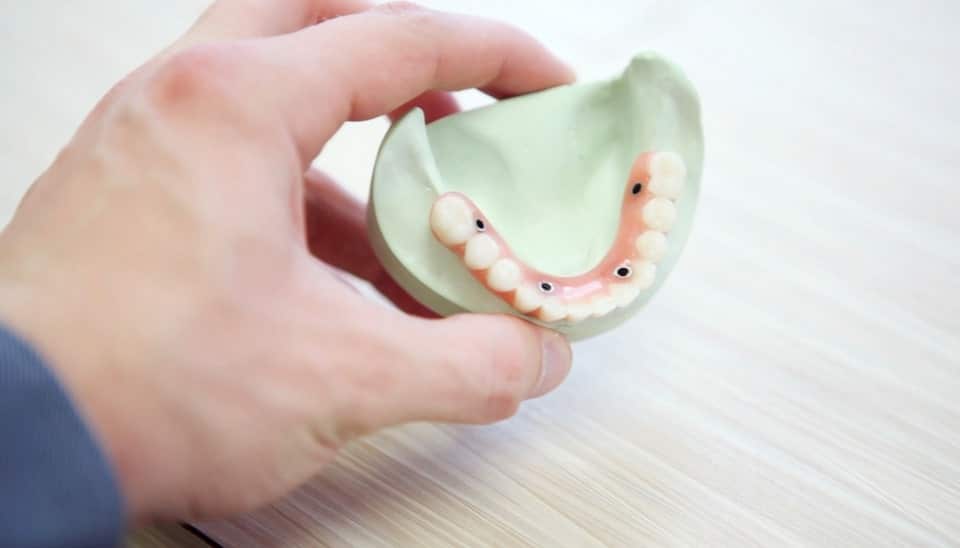
Compared with other tooth replacement options, single implants often outlast conventional bridges. Bridges typically rely on adjacent teeth and may need replacement when those teeth develop decay, fractures or gum problems, whereas implants are independent of neighbouring teeth.
At Hamilton Dental Centre, we use these long-term statistics during your consultation so you can weigh implant longevity against your age, general health, oral hygiene and lifestyle, including habits like smoking or clenching that can affect success rates.
4. Cost comparison: implants vs other options
The cost of dental implants reflects their surgical nature, materials and planning. International data suggests that in many developed countries, a single implant and crown can cost the equivalent of roughly 3,000 to 4,500 New Zealand dollars per tooth, while a traditional bridge may cost around 1,500 to 3,000 dollars per replaced tooth, depending on materials and complexity.
However, cost-effectiveness modelling shows that an implant can be a dominant long-term strategy in suitable cases. One study comparing a single tooth implant to a three-unit bridge found that although the implant had higher initial costs, it offered lower lifetime costs and higher success rates, especially once bridge replacement and treatment of complications were factored in.
Removable partial dentures are usually the lowest upfront cost option, but they may be less comfortable, less stable and can accelerate bone loss in some cases because they do not transmit chewing forces to the bone in the same way as a root or implant.
In Hamilton, the exact cost of dental implants will depend on the number of implants, need for bone grafting or sinus lift, type of restoration and your overall treatment plan. Hamilton Dental Centre provides transparent written estimates and can compare the total expected cost over 10 to 15 years of an implant versus a bridge or denture in your specific situation.
5. The implant procedure timeline
Implant treatment is usually completed in carefully staged steps rather than in a single visit. At Hamilton Dental Centre, your journey typically begins with a comprehensive consultation and 3D imaging or detailed X-rays to assess bone volume, gum health and neighbouring teeth.
If the tooth is still present, it may be removed and the site allowed to heal, or in some cases, an immediate implant may be placed at the time of extraction when conditions are ideal. After the implant is placed into the jawbone, a healing period of roughly 8 to 12 weeks is common, although this can vary with bone quality and whether grafting was performed.
Once osseointegration is confirmed clinically and radiographically, an abutment is attached, and impressions or digital scans are taken to fabricate a custom crown, bridge or denture that fits your bite and smile. The final restoration is then secured to the implant, and your dentist checks the bite carefully to protect both implants and natural teeth.
From first consultation to final restoration, many straightforward implant cases take approximately four to six months. More complex cases involving multiple implants, bone grafts or full arch solutions can take longer, but also offer transformative improvements in comfort and confidence compared with traditional dentures.
6. Hamilton Dental Centre’s implant expertise
Hamilton Dental Centre has developed a strong reputation for comprehensive implant care within the wider context of your overall oral health. Our dentists combine advanced training in dental implants with years of restorative experience, allowing us to evaluate when it is best to preserve natural teeth and when an implant is the more predictable option.
We use detailed diagnostics, including digital radiography and, where appropriate, 3D imaging to plan implant positions that respect nerves, sinuses and neighbouring roots. This careful planning supports both the aesthetics and function of your new teeth and helps maintain the health of natural teeth adjacent to implants.
A key point of difference is our focus on long-term maintenance. We do not view implant placement as a one-off procedure. Instead, our hygiene and preventive team provides ongoing support to help you protect your investment, including management of gum health around implants, early detection of mucositis and peri implantitis, and tailored home care routines.
We also work closely with anxious patients and those with complex medical histories, drawing on our experience in pain-free dentistry and behavioural techniques to make both surgical and follow up visits as comfortable as possible. This holistic approach is particularly valued by family-focused patients who may be considering implants alongside other care for partners or older relatives.
7. Book your consultation for implant assessment
If you are comparing implant vs natural teeth, or considering your tooth replacement options after an extraction or long-term denture use, a personalised assessment is essential. Every mouth is different, and the best solution balances biology, lifestyle, aesthetics, budget and long-term maintenance.
At Hamilton Dental Centre, our team will examine your teeth and gums, review your medical history, take appropriate imaging and discuss your goals. We then explain clearly whether dental implants Hamilton are suitable for you, what the likely timeline and costs will be, and how implants compare with preserving or restoring your remaining natural teeth.
To explore whether dental implants are right for you, contact Hamilton Dental Centre today to book a consultation for an implant assessment.
FAQs: Dental implants vs natural teeth
Are dental implants as strong as natural teeth?
Dental implants are designed to withstand normal biting and chewing forces and, once fully integrated, are often comparable to or stronger than natural teeth that have large fillings or previous root canal treatment. However, like natural teeth, they can be damaged by excessive forces such as grinding, so night guards and regular checks may be recommended.
Do dental implants feel different from natural teeth?
Most patients report that implants feel very similar to natural teeth after a short adjustment period, especially when the crown is carefully shaped and positioned. There is usually less sensation of pressure because implants lack the periodontal ligament, but this is rarely noticeable in everyday life.
How long do dental implants last compared with bridges?
Research indicates that many implants remain functional for 10 to 15 years or more, with survival rates often above 90 per cent at 10 years when placed and maintained properly. Bridges can also last many years, but their lifespan may be limited by decay or fractures in the supporting teeth, which can mean more complex treatment later.
Are implants more expensive than other tooth replacement options?
Yes, implants usually have a higher initial cost than bridges or removable dentures because they involve surgery, premium materials and more planning. Over time, though, implants can be cost-effective because they tend to last longer and do not require drilling healthy adjacent teeth, which reduces the risk of future problems.
Who is a good candidate for dental implants?
Good candidates generally have finished jaw growth, have enough healthy bone or are suitable for bone grafting, and do not have uncontrolled medical conditions that impair healing. At Hamilton Dental Centre, your dentist will also consider your oral hygiene, smoking status and expectations before recommending implants as part of a personalised treatment plan.

Site map
Services
Contact Us
T: 07 854 8905
E: info@thehdc.co.nz
3/111 Thomas Road,
Rototuna, Hamilton
copyright © 2025 Hamilton Dental Centre | Credit Terms | Web development by Digital Hothouse