
Root canal treatment has a reputation for being painful and frightening, but modern endodontic care is highly effective, very predictable, and usually no more uncomfortable than having a filling. At Hamilton Dental Centre, root canal treatment in Hamilton is focused on relieving tooth pain, saving natural teeth and making the whole experience as calm and pain-free as possible.
Root canal myths vs reality
- A root canal is a tooth-saving procedure that removes infected or inflamed dental pulp from inside the tooth, cleans and seals the canals, and usually allows the tooth to stay in function for many years.
- With modern local anaesthetics, careful technique and pain-free dentistry methods, most patients report that root canal treatment feels similar to having a standard filling and provides significant tooth pain relief.
- Root canal therapy has high success rates when planned and restored correctly, and in many cases, it is the best option for keeping your natural tooth instead of extracting it and moving straight to implants or bridges.
What is a root canal, and why is it needed?
Inside every tooth is a small space containing the dental pulp, a soft tissue made up of nerves, blood vessels and connective tissue. When deep decay, cracks, repeated dental work or trauma allow bacteria to reach this pulp, it becomes inflamed or infected. This can cause intense toothache, lingering sensitivity to hot or cold, pain when biting, swelling, or a pimple-like spot on the gum.
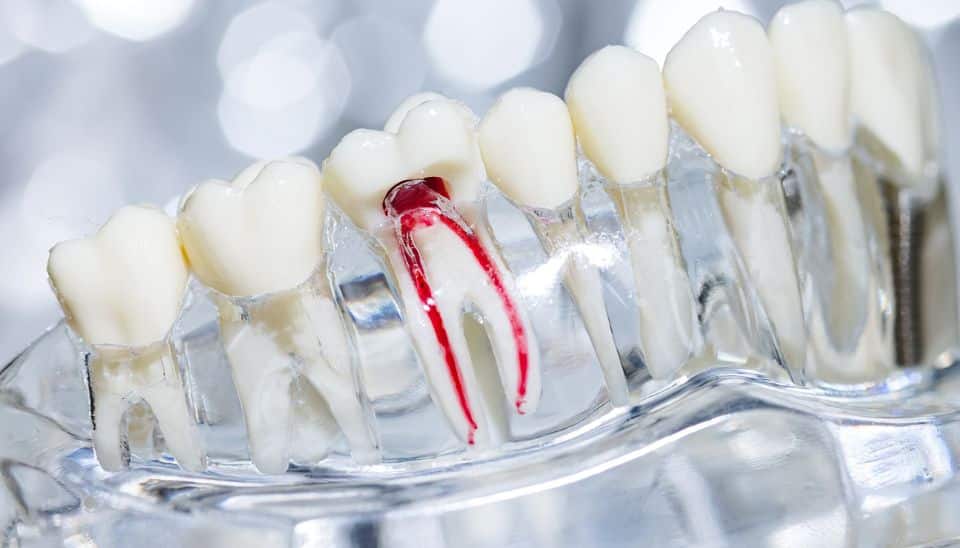
Root canal treatment, or root canal therapy, is the branch of endodontics that deals with this problem. Rather than removing the whole tooth, your dentist removes the diseased pulp from inside the root canals, disinfects these spaces and seals them with a biocompatible material. The goal is to eliminate infection, prevent it from returning, and keep the tooth in place so you can chew comfortably.
Without root canal treatment, an infected tooth will not heal on its own. The infection can spread to the bone around the root, leading to an abscess, swelling and sometimes serious general health complications. At that point, the alternatives are usually either extraction or urgent endodontic care. For many people, treating and saving the tooth is the most conservative and cost-effective long-term option.
Common myths about root canals (debunked)
Myth 1: Root canals are extremely painful
This is probably the biggest myth. Decades ago, before modern anaesthetics and techniques, some dental procedures were uncomfortable. Today, with effective numbing and careful pain management, most root canal treatments feel similar to having a filling, and the treatment actually removes the source of pain rather than causing it.
Myth 2: It is better to pull the tooth than have a root canal
Extraction can seem simpler, especially if you are in pain, but removing a tooth creates a new set of problems. Gaps can affect chewing, speech, appearance and the way your bite comes together. Neighbouring teeth may drift or tip into the space, and the bone in that area can shrink over time. Replacing a missing tooth with an implant, bridge or denture is usually more complex and costly than saving the natural tooth with root canal therapy and a crown.
Myth 3: Root canal treated teeth always fail
In reality, root canal therapy has a high long-term success rate when performed to a good standard and followed by appropriate restoration and care. Many treated teeth last for years, or even decades. Failures are more likely when canals are not thoroughly cleaned and sealed, when the tooth is not properly restored afterwards, or when new decay or cracks appear. Regular check-ups and good oral hygiene significantly improve the outcome.
Myth 4: Root canals cause illness in other parts of the body
Older theories suggested that bacteria trapped inside root canal treated teeth could cause systemic disease. These ideas have been thoroughly debunked. Modern evidence supports the safety and effectiveness of endodontic treatment as a routine part of dental care when proper infection control and techniques are used.
The actual root canal procedure explained
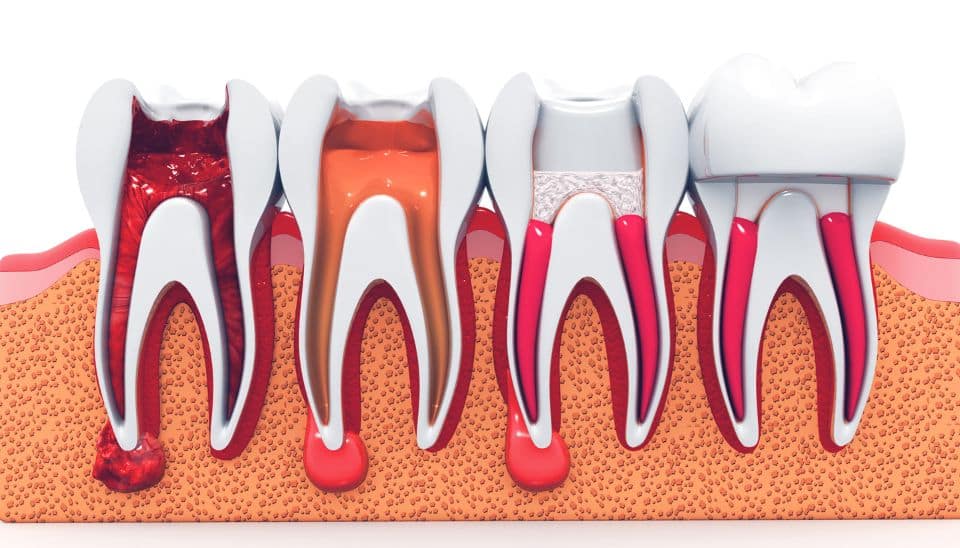
Understanding the steps involved can take much of the fear out of the process. While there can be variations depending on the tooth and level of infection, a typical root canal procedure at Hamilton Dental Centre follows this pattern:
1. Assessment and diagnosis
Your dentist takes a detailed history of your symptoms, examines the tooth and surrounding tissues, and uses tests such as X-rays, temperature and tapping to confirm the diagnosis. The aim is to determine whether the pulp is irreversibly inflamed or infected and whether root canal therapy is the best option.
2. Anaesthesia and isolation
Local anaesthetic is administered to completely numb the tooth and the surrounding area. Once you are comfortable, a thin rubber sheet called a rubber dam is placed around the tooth. This keeps the tooth dry and free from saliva, improves visibility and prevents small instruments or materials from being swallowed.
3. Access and cleaning
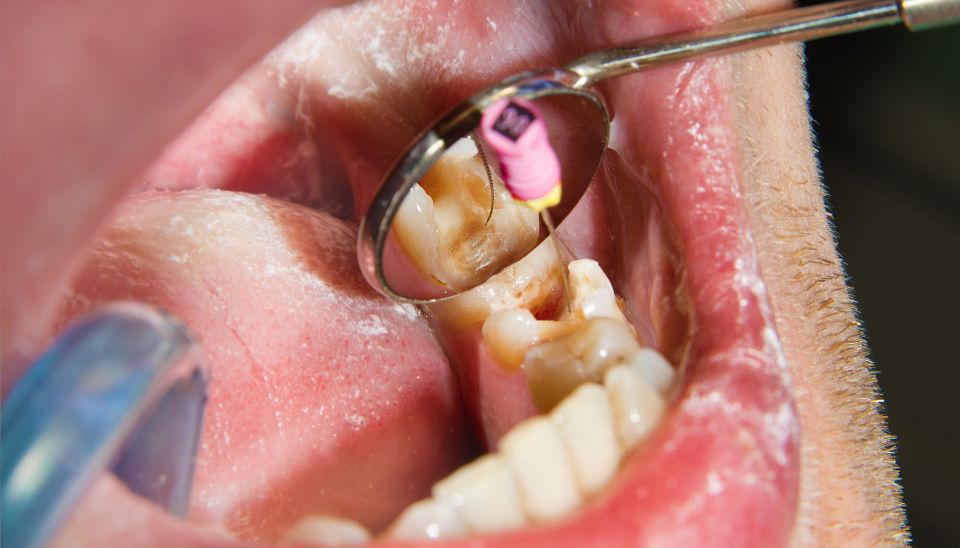
A small opening is made in the top of the tooth so the dentist can reach the pulp chamber. Very fine instruments are then used to carefully remove the diseased pulp and shape the root canals to allow thorough cleaning. Antibacterial solutions are used to irrigate the canals, flushing out debris and reducing bacteria.
4. Medication and temporary filling (if needed)
In some cases, especially when there has been a significant infection, an antibacterial dressing is placed in the canals and a temporary filling is used to seal the tooth between visits. This allows further healing and helps control symptoms.
5. Filling the canals
Once the canals are clean and dry, they are filled with a rubber like material (commonly gutta percha) and a sealer cement. This three dimensional filling helps prevent bacteria from re entering the canals. The access cavity is then restored with a permanent filling.
6. Final restoration
Back teeth that have had root canal treatment often benefit from a crown. This restores strength and protects against fractures, as teeth that have lost a lot of structure can become more brittle. Your dentist will discuss the best final restoration for your tooth.
Many root canal procedures are completed in one or two visits. The number of appointments depends on the complexity of the root canal system and the level of infection when you first present.
Pain management and anaesthesia
Pain control is an essential part of modern root canal treatment in Hamilton. Before starting, your dentist will check that the area is fully numb. If you are very anxious or have had difficult experiences in the past, you can discuss additional pain-free dentistry options such as topical anaesthetic gel, extra local anaesthetic or relaxation techniques.
During the procedure, you may feel some pressure or vibration from instruments, but you should not feel sharp pain. If you do, the team will stop immediately and give more anaesthetic. Your comfort is not negotiable.
After the appointment, it is normal to experience some tenderness or mild ache in the area for a few days, especially when biting. This is usually well controlled with over-the-counter pain relief and gentle chewing on the opposite side. As the inflammation settles and the infection resolves, the deep toothache that brought you in typically improves dramatically.
For very nervous patients, Hamilton Dental Centre can combine endodontic treatment with additional comfort measures and a calm, supportive environment. The goal is to change your expectations about what dentistry feels like, not just get you through one appointment.
Recovery timeline and aftercare
Most people return to normal daily activities straight after a root canal appointment. You may feel numb for a few hours, so it is best to avoid chewing on that side until the anaesthetic wears off to prevent accidentally biting your cheek or tongue.
Over the next few days, it is wise to:
- Avoid chewing hard foods on the treated tooth until the final restoration is placed
- Take recommended pain relief as needed
- Keep up gentle brushing and flossing around the area
- Call the practice if pain worsens or swelling appears
Once the tooth has been fully restored with a filling or crown, you can gradually return to normal eating on that side. In general, any tenderness should ease within a week or so. Some complex cases can take a little longer to settle, but severe or increasing pain is not typical and should always be checked.
In the longer term, maintaining regular check-ups and professional cleans, along with good home care, helps ensure the tooth and surrounding gums stay healthy. Root canal treated teeth can still develop new decay or gum problems if plaque is not well controlled, so prevention remains important.
Success rates and longevity
When performed to a high standard and followed by an appropriate restoration, root canal therapy has excellent long-term outcomes. Many studies show success rates in the range of 85 to 95 percent over 8 to 10 years, especially for teeth that were not severely broken down or infected for a long time before treatment.
Factors that improve success include:
- Early diagnosis and timely treatment
- Thorough cleaning, shaping and filling of all canals
- A well-sealed final restoration, often a crown for back teeth
- Good oral hygiene and regular dental reviews
- Managing habits such as grinding with a night guard where needed
Even in cases where a tooth does not heal as expected, retreatment or related procedures can often resolve the problem without immediate extraction. In other words, a tooth that has had root canal therapy still has a good chance of many years of comfortable function when carefully managed.
When root canals are the best option
There is no single solution for every damaged tooth. Sometimes, a filling or crown is sufficient. In other cases, a tooth may be too cracked or decayed to save. However, there are many situations where root canal treatment is clearly the best balance between preserving your natural tooth and resolving infection and pain. These include:
- Deep decay reaching the pulp, but with enough healthy tooth structure to support a restoration
- A tooth with severe lingering pain to hot or cold, indicating irreversible pulpitis
- An abscessed tooth that is still structurally salvageable
- A tooth that already has a crown or bridge you wish to retain
- Cases where maintaining the tooth preserves bone and avoids more complex replacement treatment
At Hamilton Dental Centre, our dentists consider both the biology and the bigger picture. We will discuss the pros and cons of root canal therapy, extraction with replacement, and any other realistic options. If we believe that a root canal will not give you a predictable long-term result, we will say so openly and help you choose a better path.
What Our Patients Say
“Great experience” and “root canal” are not words that are often found together, but that was the experience of one of our patients following a recent root canal treatment:
“A great experience, even though I had to have a root canal done. Dave is a great dentist who genuinely cares about his patients. He made sure I was not in pain and that I was comfortable and aware of what was happening the entire time. I highly recommend this dental surgery. They care and go the extra mile to make sure you are looked after. This level of service is hard to find these days.” – Shereen Parker
Emergency root canal consultation
If you are experiencing severe toothache, swelling, sensitivity that will not go away, or have been told you might need a root canal, the most important step is to seek timely assessment. Waiting and hoping the pain will disappear can allow infection to spread and reduce the chances of saving your tooth.
Hamilton Dental Centre offers prompt appointments for urgent tooth pain and suspected root canal problems. During your visit, we will examine the tooth, take any necessary X-rays, explain the diagnosis in clear terms and outline all your options, including root canal treatment in Hamilton and pain free dentistry approaches to keep you comfortable.
If you need emergency relief, contact Hamilton Dental Centre today to book an urgent root canal consultation.
FAQs: root canal treatment
Is a root canal more painful than an extraction?
With effective local anaesthetic, both procedures can be carried out comfortably. Many patients report that the pain they feel before treatment is far worse than anything they experience during a modern root canal or extraction. The difference is that a root canal allows you to keep your tooth, which often provides better chewing and stability over time.
How many appointments will I need for a root canal?
Simple cases can sometimes be completed in a single visit, especially for front teeth with fewer canals. Back teeth or teeth with significant infection may require two or more appointments. Your dentist will give you a clear plan once they have assessed the tooth.
Will my tooth be weaker after a root canal?
The inner pulp is removed, but the outer tooth structure remains. Because many teeth needing root canals have already lost a lot of structure to decay or previous fillings, they are more prone to cracking. This is why a crown or similar reinforcement is often recommended for back teeth after root canal treatment.
Can a root canal fail and what happens then?
Occasionally, a tooth may remain infected or become reinfected due to complex root anatomy, missed canals, or new decay or cracks. In many cases, retreatment or other endodontic procedures can address the issue. If the tooth cannot be saved, your dentist will discuss replacement options such as implants, bridges or partial dentures.
How do I know if I need a root canal or just a filling?
Symptoms like lingering pain after hot or cold, pain that wakes you at night, swelling or a gum pimple, and pain on biting can all suggest that the pulp is irreversibly inflamed or infected. Only a proper examination and tests can confirm this. If you have any of these signs, book an assessment as soon as possible so we can identify the cause and recommend the most appropriate treatment.

Site map
Services
Contact Us
T: 07 854 8905
E: info@thehdc.co.nz
3/111 Thomas Road,
Rototuna, Hamilton
copyright © 2025 Hamilton Dental Centre | Credit Terms | Web development by Digital Hothouse